 Presented by PAY FIT


Tirzepatide: what the research proved and why it costs so much
Tirzepatide delivered strong results in phase 3 trials, yet in the United States it lists at over US$1,000 a month. The public figures show that this price is a choice, not a cost.

Tirzepatide, sold by Eli Lilly as Mounjaro and Zepbound, is one of the most thoroughly studied medicines of the past decade: in phase 3 trials with thousands of participants it outperformed placebo and also semaglutide. The problem is not the science; it is the price. In the United States the list price is above US$1,000 a month, while independent studies estimate that medicines from the same family can be manufactured for a few dollars. In this article we keep facts, with their sources, separate from our opinion.
What is tirzepatide and how does it work?
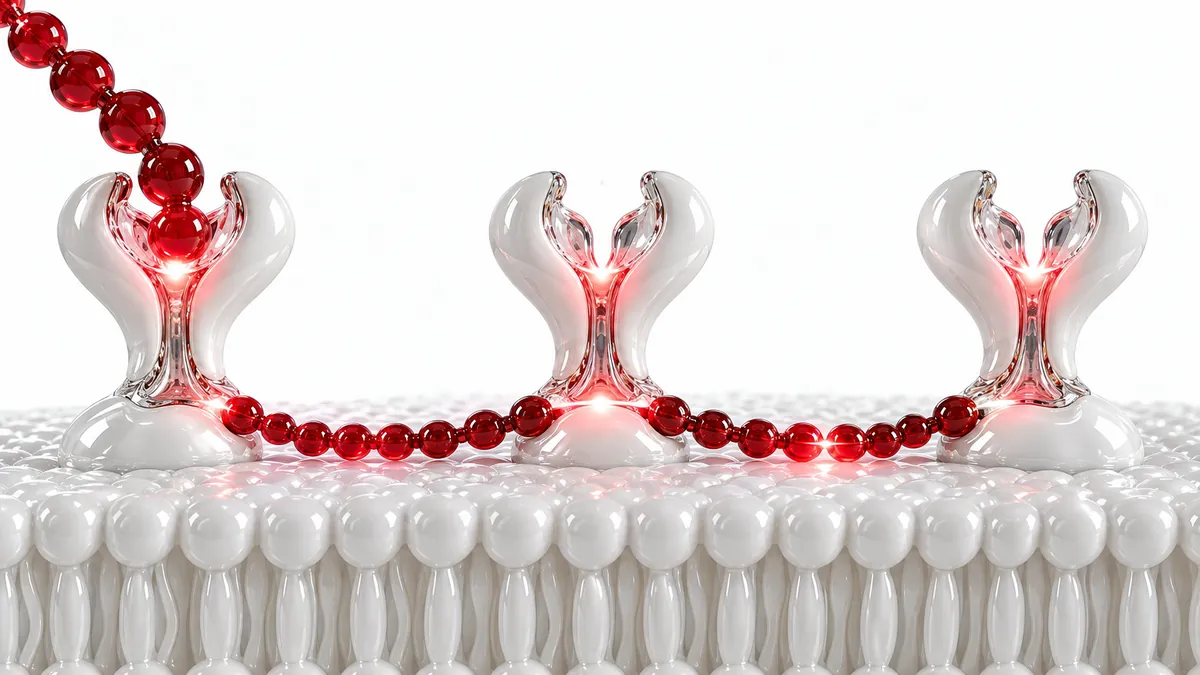
It is a synthetic peptide built on the sequence of GIP, a hormone the gut releases after meals, with a fatty-acid chain that keeps it in the body for longer. It activates two receptors, GIP and GLP‑1, which is why it affects satiety, how quickly the stomach empties and how much insulin is released in response to the glucose available. It first reached the market for type 2 diabetes under the name Mounjaro; at the end of 2023 the same molecule was given the name Zepbound for obesity. One active ingredient, two brands.
What did the SURPASS and SURMOUNT trials show?
Lilly split the research into two programmes. SURPASS tested the molecule in adults living with type 2 diabetes: in one of its core trials, which NEJM (New England Journal of Medicine) published in 2021, tirzepatide lowered glycated haemoglobin more than semaglutide, the benchmark at the time. SURMOUNT looked at obesity without diabetes. In SURMOUNT-1, which followed 2,539 adults for 72 weeks, the average reduction in body weight in the treated groups ranged from 15% to 21%, against roughly 3% in the placebo group. In 2025, SURMOUNT-5 put tirzepatide head to head with semaglutide in obesity, and the tirzepatide group's average was larger.
Two honest caveats. First, these are group averages in specific populations and do not predict any one person's result. Second, every one of these trials was funded by the manufacturer. That does not invalidate them, since they went through review by other scientists and appeared in leading journals, but readers deserve to know it.
There is another detail that hits the wallet. In SURMOUNT-4, participants who were switched from tirzepatide to placebo regained much of the body-weight reduction they had achieved. In other words, for most people treatment tends to be ongoing, and ongoing treatment at a high price becomes a subscription for life.
How much do Mounjaro and Zepbound cost?
In the United States, the list price of Mounjaro is around US$1,112 a month and that of Zepbound reaches US$1,086 for 28 days, according to GoodRx in January 2026. Over twelve months that is more than US$13,000. To people buying without insurance directly from the manufacturer, Lilly has sold Zepbound vials for US$299 to US$449 a month since December 2025. The same product, in another format and through another channel, costs less than half: the list price does not reflect what it costs to make.
In Brazil, when Mounjaro arrived in 2025, the maximum consumer price for a one-month box was set at R$3,627.82, according to the Federal Pharmacy Council. The minimum wage that year was R$1,518: at the ceiling, one month of medicine cost more than two minimum wages. In the United States, a 2024 KFF poll found that more than half of adults who had used medicines in this class found them difficult to afford, including people with insurance.
Now look at India. When Lilly launched the same active ingredient there in March 2025, Bloomberg calculated that the starting presentation cost almost fourteen times less than in the United States. One can argue that each country has different incomes and health systems, and that is partly true. But it confirms the central point: the price is not dictated by the cost of manufacturing; it is set country by country, according to how much each market will bear.
How much does it cost to make a medicine like this?
We found no published estimate specific to tirzepatide, but there are estimates for semaglutide, the rival molecule from the same family. An analysis published in JAMA Network Open in 2024, based on international trade data for the active ingredient, estimated that injectable semaglutide could be sold at a profit for between US$0.89 and US$4.73 a month. Another, published in 2026 in the journal Obesity, calculated that a generic injectable version could cost US$28 to US$140 per person per year, with the injection pen accounting for a large share of the bill.
Tirzepatide uses more active ingredient per month than semaglutide, so its cost is likely to sit above those estimates. There is, however, a figure from Lilly itself: in its 2025 annual report filed with the SEC, the company's gross margin was 83%. Of every US$100 in sales, about US$17 was the cost of the products. That figure covers the whole company, not tirzepatide alone, but it shows the gap between making and charging.
When does the tirzepatide patent expire?
According to the same annual report, the compound patent runs until 2036 in the United States, 2037 in the major European countries and 2040 in Japan. The filing also acknowledges that the company may keep exclusivity beyond those dates through later patents on formulations, uses or manufacturing processes. Until then, no other manufacturer can sell the molecule in those markets without Lilly's permission.
What happens when exclusivity ends already has a recent example. In India, the semaglutide patent expired in March 2026: generic versions appeared almost at once, some below 2,000 rupees a month, and the original manufacturer cut its own prices by up to 48%, according to Business Today. Competition achieved in weeks what years of talk about access had not.
Our view: a price that decides who gets treated
In 2025, Mounjaro and Zepbound together brought in about US$36.5 billion, according to Lilly's annual report, and by the third quarter of that year cumulative tirzepatide sales had overtaken those of Keytruda, until then the world's best-selling medicine, according to STAT. Developing a new medicine is expensive: an estimate published in JAMA in 2020 put the median at around US$1 billion, including the failures along the way. Even if tirzepatide had cost ten times that, a single year of sales would cover the bill more than three times over.
That is why, in our reading, the current price does not reward innovation: it maximises profit for as long as the patent lasts. Patents exist to reward inventors, and that reward has already arrived. Using one to hold, for more than a decade, a price that only a minority can pay turns a scientific advance into a luxury good. A medicine with solid trial results that only the wealthy can buy solves the problem for very few.
We are not saying anyone has broken the law. We are saying it is a commercial decision, and that a different decision is possible. The proof is in the figures themselves: when there was pressure, the price came down.
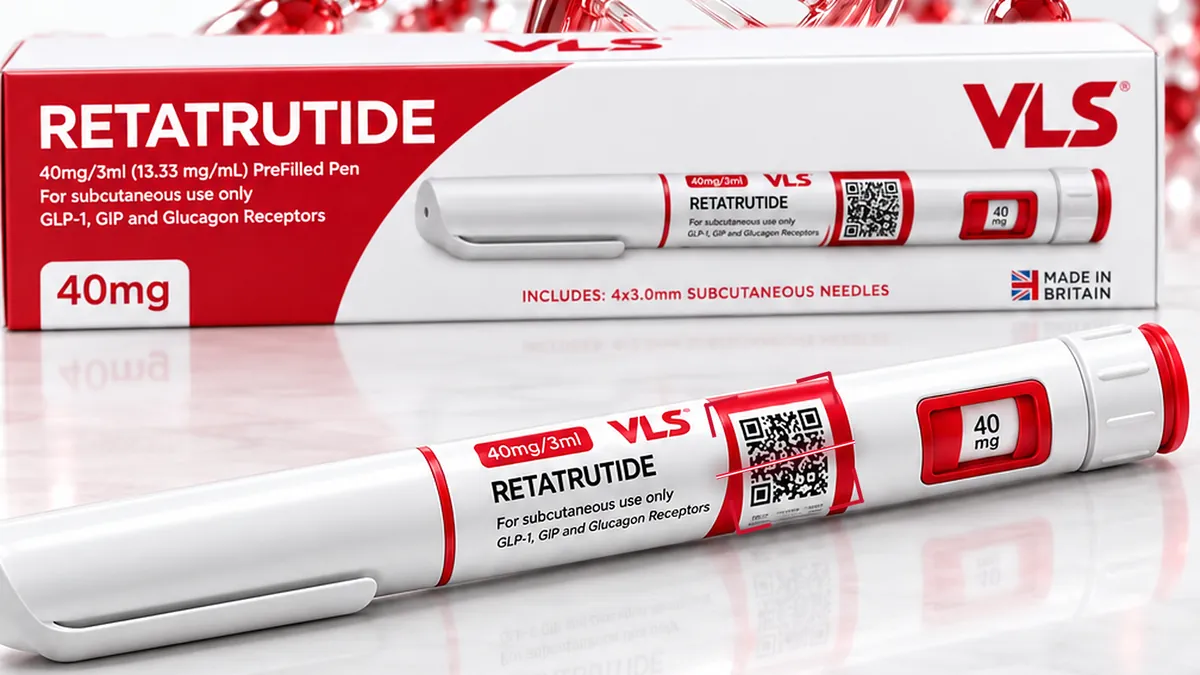
To understand the next generation of molecules, such as retatrutide, which acts on three receptors, read how a triple agonist works and how to read a placebo-controlled study. VLS manufactures a retatrutide pen; the technical details are on the product page.
Informational content; it does not replace advice from a healthcare professional.
Sources
- SURPASS-2: tirzepatide versus semaglutide in type 2 diabetes (New England Journal of Medicine, 2021)
- SURMOUNT-1: tirzepatide in obesity, 72 weeks (New England Journal of Medicine, 2022)
- SURMOUNT-4: what happens when tirzepatide is stopped (JAMA, 2024)
- SURMOUNT-5: tirzepatide versus semaglutide in obesity (New England Journal of Medicine, 2025)
- Official Mounjaro prescribing information (DailyMed, US National Library of Medicine)
- Reuters: Zepbound reaches the US market (November 2023)
- GoodRx: Mounjaro price without insurance (2026)
- GoodRx: Zepbound price (2026)
- BioSpace: Lilly cuts the price of Zepbound vials sold direct (December 2025)
- Brazilian Federal Pharmacy Council: Mounjaro launch date and price (March 2025)
- Brazilian minimum wage in 2025 and 2026 (Folhapress)
- KFF: poll on the use and cost of GLP‑1 medicines (May 2024)
- Bloomberg (via Gulf News): Mounjaro launch in India (March 2025)
- Sustainable cost-based prices for diabetes medicines (JAMA Network Open, 2024)
- How far semaglutide prices could fall (Obesity, 2026)
- Eli Lilly: 2025 annual report on Form 10-K filed with the SEC (February 2026)
- Business Today: semaglutide generics in India and price cuts (March 2026)
- STAT: tirzepatide overtakes Keytruda in sales (October 2025)
- Research and development investment needed to bring a new medicine to market (JAMA, 2020)