
 Presented by PAY FIT


What people ask most about retatrutide
Answers based on published studies and on the manufacturer’s data, arranged by topic. The dose is always set by a healthcare professional.
The molecule
What retatrutide is and how it differs from other peptides.
What is retatrutide?
Retatrutide is a synthetic peptide that activates three hormone receptors together: GLP‑1, GIP and glucagon. That is why it is called a triple agonist: it is a single molecule with three targets, not a mixture of three substances.
It was developed by the pharmaceutical company Eli Lilly under the code LY3437943, and in 2022 a paper was published that runs from its design in the laboratory to the first data in volunteers. Today it is being studied in obesity, type 2 diabetes, fatty liver, sleep apnoea and other weight-related conditions.
It is not a natural hormone or a steroid but a chain of amino acids designed to combine signals the body already uses. What a peptide is, from scratch, is explained in this article; the pen itself is presented on the product page.
How does retatrutide work in the body?
Retatrutide binds to three receptors on the surface of cells and activates them. Two of them, GLP‑1 and GIP, are mainly linked to appetite and to the insulin response after eating; the third, the glucagon receptor, is linked to the use of energy.
The paper that introduced the molecule (Cell Metabolism, 2022) describes its activity in the laboratory as evenly matched at the glucagon and GLP‑1 receptors, and greater at the GIP receptor. In mice with obesity, the lower food intake attributed to GLP‑1 and GIP came on top of a higher energy expenditure attributed to glucagon.
These are cell and animal data: they explain the design, not what happens in a person; for that there are the clinical trials summarised below. The receptor-by-receptor comparison is in One, two or three receptors.
Is retatrutide a GLP‑1 or a “GLP-3”?
Retatrutide activates the GLP‑1 receptor, but also the GIP and glucagon receptors. “GLP-3” is a nickname from social media and forums that sums up the idea of three receptors; it is neither the name of a hormone nor a category used in the papers that describe the molecule.
In publications and trial registries it appears as a triple agonist of the GIP, GLP‑1 and glucagon receptors, or as LY3437943, terms that lead to more precise information than the nickname.
How does retatrutide differ from semaglutide and tirzepatide?
The central difference is how many receptors each molecule activates: semaglutide acts on one (GLP‑1), tirzepatide on two (GLP‑1 and GIP) and retatrutide on three (GLP‑1, GIP and glucagon).
The glucagon receptor is what retatrutide adds: in the laboratory it is associated with energy expenditure, while GLP‑1 and GIP are associated with appetite and the insulin response.
How much is known about each also differs: semaglutide and tirzepatide have phase 3 obesity trials published in 2021 and 2022, whereas the first phase 3 results for retatrutide became known from December 2025.
They are different molecules and are not interchangeable; moving from one to another is a decision for a healthcare professional.
Sources
- Cell Metabolism, 2022 · discovery of the molecule and first data in volunteers
- New England Journal of Medicine, 2021 · phase 3 trial of semaglutide in obesity
- New England Journal of Medicine, 2022 · phase 3 trial of tirzepatide in obesity
- Eli Lilly press release, December 2025 · main results of TRIUMPH-4
Is retatrutide better than tirzepatide or semaglutide?
Today there is no answer based on a direct comparison: the trials that set retatrutide against tirzepatide and against semaglutide are registered, but at the time of this review they had not published results.
ClinicalTrials.gov lists a phase 3 trial against tirzepatide in adults with obesity (TRIUMPH-5) and another against semaglutide in adults with type 2 diabetes (TRANSCEND-T2D-2). Until they are published, any ranking comes from putting different studies side by side.
Comparing figures from different trials leads to weak conclusions, because the population, the duration, the analysis and the comparison group all change. Besides, “better” depends on the person, and that assessment is made by a professional. How to read a study without falling into those traps is explained in this article.
The studies
Phases, the TRIUMPH programme and what has been published so far.
What research phase is retatrutide in?
Retatrutide is in phase 3, the stage of large trials with thousands of participants. Its main programme, TRIUMPH, began in 2023, and the first phase 3 results were released in December 2025.
During 2026, results from other trials in the programme were announced, and in October the full data from two trials in obstructive sleep apnoea were published (New England Journal of Medicine). Other studies remain open, such as one on cardiovascular and renal events with about 10,000 participants and a primary completion date expected in 2029.
Being in phase 3 means that data are still being gathered and published; the whole path is laid out in the full research timeline.
What is the TRIUMPH retatrutide programme?
TRIUMPH is the set of phase 3 trials with which the maker of the molecule is evaluating retatrutide in adults with obesity or overweight. According to its December 2025 press release, the first four trials together enrolled more than 5,800 participants.
Each one answers a different question: TRIUMPH-1 included adults without diabetes; TRIUMPH-2, adults with type 2 diabetes; TRIUMPH-3, adults with severe obesity and diagnosed cardiovascular disease; and TRIUMPH-4, adults with knee osteoarthritis. The first two also had sub-studies in obstructive sleep apnoea.
All are randomised, double-blind and placebo-controlled. Press releases give advance notice of the main results; the full data arrive when each trial is published in a peer-reviewed journal.
How much weight did participants lose in retatrutide studies?
In the published studies, the retatrutide groups lost more weight on average than the placebo groups. In the phase 2 obesity trial (New England Journal of Medicine, 2023), the group on the study’s highest dose reached an average of 24.2% less body weight at 48 weeks, compared with 2.1% on placebo.
That is a group average, obtained with inclusion criteria, controls and follow-up defined by the protocol. Within each group some people changed more and some changed less: the figure does not predict anyone’s result.
The phase 3 trials of the TRIUMPH programme also reported differences against placebo; how to read them without mixing them up is explained in the guide to reading placebo-controlled studies. Each case is assessed by a healthcare professional.
Why does the same retatrutide study appear with different figures?
Because trials report the same result using two statistical analyses, called estimands, that answer different questions. That is why two reports on the same study can quote different numbers without either being wrong.
The efficacy estimand calculates what would happen if everyone followed the treatment as planned; the treatment-regimen estimand includes everyone assigned to each group, even if they stopped treatment, and usually gives a lower average.
In the TRIUMPH-1 press release, for example, the same group appears with an average weight reduction of 28.3% at 80 weeks in the first analysis and 25.0% in the second. Both are group averages and neither describes one person. When comparing studies, check which estimand each figure uses.
What has been studied about retatrutide in type 2 diabetes?
In type 2 diabetes, retatrutide was studied mainly for its effect on blood glucose, measured with glycated haemoglobin (HbA1c), and on weight. In the phase 2 trial published in The Lancet in 2023, the retatrutide groups showed larger HbA1c reductions than the placebo group.
That trial, at 42 centres in the United States, also included a group on dulaglutide, a well-known GLP‑1 agonist, as an active comparator. The most frequent adverse events were gastrointestinal and mostly mild to moderate, with no severe hypoglycaemia reported.
In phase 3, the TRIUMPH-2 trial followed adults with type 2 diabetes and obesity or overweight for 80 weeks and, according to the manufacturer, met its primary objective. Each person’s control is managed by their own professional.
What do the studies show about retatrutide and fatty liver?
In a phase 2 sub-study published in Nature Medicine in 2024, liver fat fell markedly with retatrutide and barely changed with placebo. In the group on the study’s highest dose, the average relative reduction was 82.4% at 24 weeks.
The participants came from the obesity trial and had fatty liver of metabolic origin and at least 10% liver fat measured by imaging. The reduction went alongside the reductions in weight and in abdominal fat.
It is the average of a group of 98 participants, not an individual diagnosis. A phase 3 trial on this condition that includes retatrutide is listed on ClinicalTrials.gov as recruiting.
What side effects were reported in retatrutide studies?
The most frequent adverse effects were gastrointestinal: nausea, diarrhoea, constipation and vomiting, generally mild to moderate and more common in the higher-dose groups. It is the same type of effect described for other peptides in this family.
The phase 2 obesity trial also recorded a dose-related rise in heart rate, which was higher towards the middle of the study and then declined. In phase 3, the manufacturer reported more cases of dysaesthesia (abnormal sensations on the skin, such as tingling or sensitivity to touch) than with placebo, mostly mild to moderate and resolved during treatment.
In phase 3, stopping treatment because of adverse events was generally more common in the higher-dose groups than with placebo. If you have any symptom, consult the professional who is following your case, without adjusting anything yourself. For coping with changes in appetite or digestion, there are general tips in this article.
The pen
Format, needle, cartridge and disposal.
What is the difference between a prefilled pen and a vial of lyophilised powder?
What changes is who prepares the solution and what the concentration depends on. The pen leaves the factory with the solution already made and a fixed concentration; the vial of lyophilised powder has to be dissolved before use, and the final concentration depends on the volume of liquid that is added.
That is where the most common confusion lies: two vials with the same amount of powder end up with different concentrations if they are dissolved in different volumes. Besides, the declared weight of a powder can include water and salts along with the peptide, something that only the batch analysis makes clear.
Reconstitution adds manual steps (choosing and measuring the diluent, mixing, writing the date on the vial, storing what has been prepared) that do not exist with the pen. The full comparison is in Powder vial or ready-to-use pen, and how to read the pen’s concentration is explained on this page.
What is bacteriostatic water, and why does the pen not need it?
Bacteriostatic water is water for injection with a preservative, generally 0.9% benzyl alcohol, that slows the growth of bacteria in a vial from which liquid is drawn several times. It is used to dissolve or dilute powdered medicines, not to be injected on its own.
Its package leaflet warns that it must not be used in newborns, because benzyl alcohol has been associated with toxicity in them, and that its only indication is preparing other medicines. There are presentations with a different preservative concentration: the label of each product is what counts.
The retatrutide pen does not need it because it arrives with the solution ready: there is no powder to dissolve and no diluent to add. If someone offers you bacteriostatic water “for the pen”, they are talking about a different format.
Why do you need a new needle for every injection?
Because a pen needle is designed for a single use. Technique guidelines for pens say to fit a new needle each time and to remove it as soon as the injection is finished, rather than leaving it on until the next one.
Reusing needles is associated with lipohypertrophy, lumps of fatty tissue that form where the skin is pricked repeatedly and that alter absorption. A 2025 meta-analysis (Journal of Diabetes Science and Technology) singled out needle reuse and failure to rotate sites as the most important modifiable factors.
Leaving the needle on between uses also lets air or dirt into the cartridge, lets liquid leak out or lets the needle clog. That is why each needle is used once and goes straight into a rigid sharps container. The handling steps are in the three-phase guide.
Sources
- NHS · how to use a rapid-acting insulin pen
- Journal of Diabetes Science and Technology, 2025 · meta-analysis of risk factors for lipohypertrophy
- Mayo Clinic Proceedings, 2016 · international injection technique recommendations (FITTER)
- BC Children's Hospital, Endocrinology and Diabetes Unit · using pens for injection
Why is the pen needle only 3 mm long?
Because the injection is subcutaneous, into the fatty tissue under the skin, and a short needle is enough to reach it. According to an ultrasound study of 388 adults published in 2010, the skin is on average about 2 mm thick at the usual injection sites.
The same study showed that this thickness varies little between people of different weight, sex or origin. The international injection technique recommendations published in Mayo Clinic Proceedings in 2016 consider short pen needles safe, effective and less painful, and say they lower the risk of reaching the muscle.
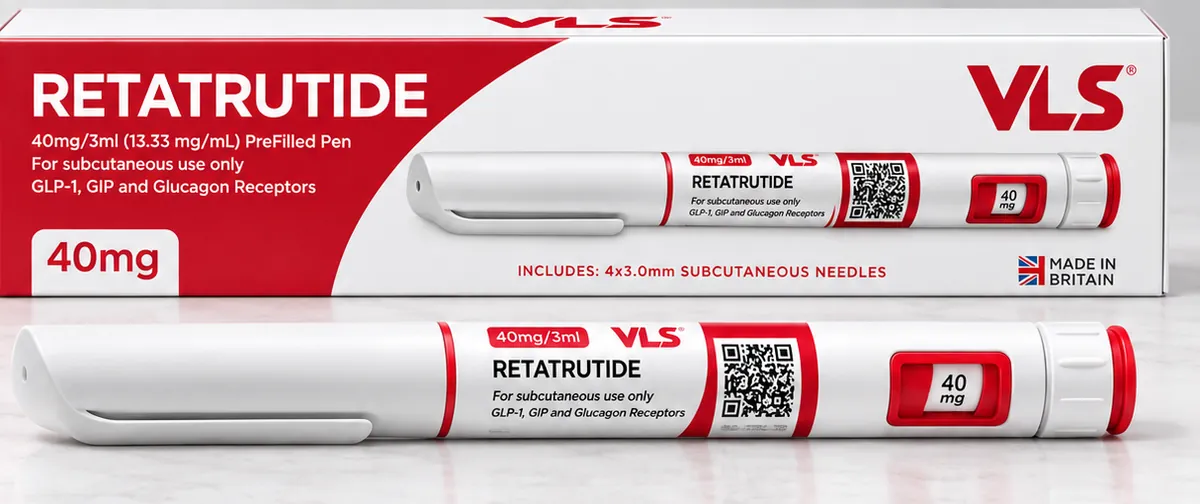
The four 3.0 mm needles included in the box are intended for that use; how to fit and remove them is explained in the handling guide, and your healthcare professional will tell you the injection site.
What should I do if I see an air bubble in the pen cartridge?
Do not inject with air in the needle: multi-dose pens include a priming step before each injection, which generally consists of fitting a new needle, pointing the pen upwards and releasing a tiny amount until liquid appears at the tip.
Hospital guidance on pens also explains where the air usually comes from: if the needle is left on between uses, air can get into the cartridge, liquid can leak out or the needle can clog. Removing it as soon as the injection ends avoids much of the problem.
The exact way to prime this pen is given in the instructions in the box. If you do not have them or the bubble does not go away, message us on WhatsApp before using it, and do not change the setting in the window.
What should the solution look like? What if it is cloudy or has particles?
If the solution looks cloudy, has particles or lumps, or is a different colour, the pen is not used. This is the criterion the World Health Organization proposes for any medicine: if it is discoloured or deteriorated, it is not used and you ask for advice.
The manufacturer has not published a detailed description of how this solution should look, so the reference is your own pen as it arrived. Look at it in good light when you receive it and before each use: any change is reason enough to stop.
If you notice anything odd, take a photo of the cartridge and of the box with the batch number in view, and send it on WhatsApp. Having been frozen or exposed to heat also counts as a warning sign, even if the solution looks normal.
Where do you throw away used needles and the empty pen?
Each used needle goes into a rigid container with a lid, made for sharps, and never into the ordinary rubbish or the recycling. If you do not have one, ask at a pharmacy or health centre how to get one.
The British health service asks you not to bend or break needles, not to fill the container above the marked line and to keep it away from children and pets; cans or bottles are not suitable. The international injection technique recommendations remind us that disposing of sharps badly exposes others to infections carried in blood.
Once the container is full, it is closed and handed in through the route your local authority or pharmacy indicates. The empty pen, without a needle, follows the same route.
Storage
Cold, freezing and time limits.
Does my fridge really keep the pen at 2 to 8 °C?
Not always, which is why it is worth checking. A study published in Diabetes Technology & Therapeutics in 2019 placed sensors next to insulin stored in household fridges and found that the temperature was outside the recommended range, on average, 11.3% of the time.
Some of the sensors even recorded temperatures below zero: a badly adjusted fridge or a shelf right against the freezer also over-cools. The British health service recommends keeping these products away from the freezer and from the cooling element.
A fridge thermometer next to the box shows whether the range is being kept, especially in summer or after a power cut; if the fridge failed, message us on WhatsApp with the batch number before using the pen.
How long can the pen stay out of the fridge?
The manufacturer does not give a maximum time out of the fridge for this pen, so there is no safe figure. The stated condition is 2 to 8 °C, and any period outside that range is assessed case by case, with the batch number to hand.
Time limits taken from other pens, such as insulin pens, circulate online, but even between insulins the time out of the fridge varies by brand. Transferring those numbers to another product is guesswork.
If it was left out, note how long, at what temperature and whether it was in the sun, put it back in the fridge and message us on WhatsApp with the batch number before the next use. If it was exposed to intense heat or it froze, it is not used.
How long does the pen last once I have started using it?
It depends on the instructions for the batch: the manufacturer has not published, in its general materials, a period of use after the first injection, so it is best not to assume one. The 24-month shelf life applies to the unopened pen, not to one that is already in use.
The practical thing is to write on the box the day you started it and to follow the instructions that come with your unit. If they do not say, or you are left with a doubt, send us the batch number on WhatsApp and we will confirm it with the manufacturer’s information.
Meanwhile, a pen that has been started always goes back in the fridge, with the cap on, with no needle fitted and inside its box, which protects it from light.
Can the pen be frozen? What if it froze by accident?
No: the pen is not frozen. And if it has frozen, it is discarded even if it looks the same once thawed. Guidelines for refrigerated injectables, such as insulin, say to discard them if they have frozen.
What most often freezes it without anyone noticing is where it is kept: the back wall of the fridge, a shelf right against the freezer, or direct contact with a gel pack or ice during a journey. The British health service asks you to keep these products away from the freezer and from blocks of ice.
If you suspect it froze, do not thaw it to test it: set it aside, take a photo of it with the batch number in view and message us on WhatsApp.
What does the pen’s 24-month shelf life mean?
It is the time the manufacturer states for the unopened pen stored at 2 to 8 °C. For your unit, the date that counts is the expiry date printed on the box, which already takes into account when that batch was made.
It helps not to mix up three pieces of information: the shelf life (a general characteristic of the product), the expiry date (that of your batch, printed on the box) and the period of use once started (according to the batch instructions). If any of the three has passed, the pen is not used.
A pen that has been outside the temperature range may not reach its expiry date in good condition, even if the printed date has not yet passed.
Travel
How to carry the pen without breaking the cold chain.
How do I travel with a retatrutide pen?
The safest way is to carry it in an insulated bag with a cooling gel pack, inside its box and with no direct contact with the gel, and to put it in a fridge as soon as you arrive. The aim is that it neither warms up nor freezes on the way.
For refrigerated injectables such as insulin, the US Centers for Disease Control and Prevention (CDC) advise an insulated container with a gel pack, not resting the product on ice and not leaving it in a car in the sun. On long trips, a small thermometer in the bag helps you keep an eye on the cold.
Work out whether the trip lasts longer than the gel keeps things cold, and plan where you will have a fridge. If the pen was outside the range, note for how long and ask us on WhatsApp, with the batch number.
Does the pen go in hand luggage or in the hold of the plane?
In hand luggage. In the hold, the temperature can drop low enough to freeze the contents, and a checked suitcase can also be delayed or lost.
The CDC advise against carrying insulin in checked baggage because it can get too cold, and recommend keeping medicines in the cabin in case the suitcase is lost or delayed; the British health service also points to hand luggage. The principle applies to any refrigerated injectable.
Airlines and countries have their own rules on needles, liquids and refrigerated products, so it is wise to confirm them with the airline and with the destination country before you travel.
Does airport X-ray screening damage the pen?
The manufacturer has not published data on this pen and X-rays, so, if you are concerned, the prudent option is to ask for a manual inspection at the security checkpoint.
Travel guides for people with diabetes warn about X-rays mainly for electronic devices, such as insulin pumps and glucose sensors, and suggest manual inspection. For medicines, the general advice is to carry them in hand luggage, in their original packaging and labelled.
What the manufacturer does state is the storage temperature, and looking after it is what depends most on you. Security procedures vary by airport: confirm them before you fly.
What should I bring with the pen when I travel?
It is a good idea to carry the pen in its original box, with the batch and expiry date in view, enough new needles, a small container for used ones and a note from your healthcare professional explaining that you use an injectable medicine.
The CDC recommend keeping medicines in their original labelled packaging, asking the healthcare professional who recommends them for a note when they are injectables, and finding out beforehand what the destination country and any stopover countries allow. Some countries ask for specific documentation for medicines or needles.
Each country and each airline has its own rules: check them in good time. If you need product details for that process, message us on WhatsApp.
Authenticity and certificates
Warning signs, batch, code and certificate of analysis.
How can I spot a fake retatrutide pen?
The clearest signs are in the packaging and in the seller: a broken seal, a batch number or expiry date that does not match, spelling mistakes, a code that cannot be verified and a price far below the usual.
The World Health Organization advises being wary of sites with no physical address or landline, of suspiciously low prices and of “two for one” offers. On receiving the product, it suggests checking that the seals are intact, that the batch number and expiry date match on all the packaging and that the contents do not look discoloured or deteriorated.
Producing, testing and transporting a cold peptide has costs that do not go away: a price that is too low deserves attention. If something does not add up, do not use the pen: enter the code on the verification page and message us on WhatsApp with photos of the box. What each code on the packaging means is explained in this article.
Does a certificate of analysis prove my pen is genuine?
Not by itself. A certificate of analysis reports the results for one particular batch; it tells you something about your pen only if its batch number matches the one on your box and if the document reaches you through a trustworthy channel.
A PDF is easily copied and edited, and it can circulate alongside products that never came from that batch. That is why the check rests on three pieces: the intact seal, the verification code and the batch number that connects the box to its certificate.
Also, the certificate we publish corresponds to the active ingredient as a powder (batch R20260318), not to the solution in a finished pen. The document for your batch is requested on WhatsApp; how to read it is explained in this article, and the available certificates are on this page.
Does 99% purity mean the product contains the stated amount?
No. Purity indicates what share of what was detected is the correct molecule, but it does not say how many milligrams of peptide there are in a vial or a pen. They are two different questions, answered by different measurements.
In a powder, besides the peptide there is water and counter-ions: salts that stay bound to the molecule during synthesis and purification. That is why peptide manufacturers calculate the net peptide content separately and, to know the real amount, combine the weight, that content and the purity. A paper published in 2025 in Pharmaceuticals calls for counter-ions to be measured and declared.
A high purity on its own does not replace checking the batch. The 99.38% on certificate R20260318 is the purity of the active ingredient as a powder, not a measure of what a pen contains, whose amount is stated on the label: 40 mg in 3 mL.
Responsible use
Who decides, what is not combined and what is not replaced.
Who decides the dose and frequency of retatrutide?
Always a healthcare professional, after assessing the person. This site does not publish doses, schedules or frequencies: the window shows the chosen setting, but which one is appropriate is decided by whoever is following the case.
In clinical trials, each dose level was set by the protocol and applied with medical follow-up and defined exclusion criteria. Those figures describe the design of a piece of research, not an indication for anyone.
That is why it is not advisable to copy schedules from forums or online calculators, or to change the window setting on your own. If your question is how the label is read, see this page; if it is how much to use, your professional has the answer.
Does retatrutide replace healthy eating and physical activity?
No. In the TRIUMPH programme, retatrutide was evaluated as an addition to healthy eating and physical activity, not as a replacement, according to the trials’ own descriptions.
Besides, the TRIUMPH-1 trial included only people with at least one previous unsuccessful attempt to lose weight through diet, and all participants had frequent check-ups, which is different from everyday life.
Eating well, staying hydrated, moving and sleeping remain the foundation, with or without treatment. Practical ideas for keeping up those habits are in this article.
Can retatrutide be combined with semaglutide, tirzepatide or other peptides?
Not on your own. Retatrutide already acts on the GLP‑1 receptor, the same one that semaglutide and tirzepatide act on, so combining them adds up similar mechanisms, and nobody has studied what happens when they are put together.
The retatrutide trials compared it with placebo or with another molecule separately, and excluded people who had used weight-loss medicines in the previous 90 days. They did not evaluate these combinations, so there is no basis for anticipating their safety.
The same applies to mixes with other peptides that circulate in forums. Any medicine you already use, or want to add, must be known to your healthcare professional before you start.
Orders and the site
Shipping, warranty and contact.
How is shipping arranged and how much does freight cost?
Shipping is arranged on WhatsApp. Freight is charged separately from the product: its value depends on the destination and is confirmed before the order is closed.
In that same conversation you can ask how the cold will be maintained during transport. When the parcel arrives, check the box and put the pen in the fridge without delay. The full conditions are in the shipping policy.
Can I return the pen? What does the warranty cover?
Returns are not accepted. For any claim, the condition is to have filmed the opening of the box: without that video there is no warranty.
The video must show the intact seal before opening, the expiry date and everything the box contains. If something different from what you ordered arrived, or something with a visible problem, send the video and the order number on WhatsApp and the case will be reviewed. The detail is in the returns policy.
Who presents this site and how do I get in touch?
This site is presented by PAY FIT, which gathers the information from VLS Peptides about the retatrutide pen and publishes it in four languages. The only contact channel is the WhatsApp number +595 994 350352.
Questions about batches, certificates, code verification, shipping and warranty are answered in that chat. There are no other official phone numbers or email addresses: if someone contacts you by another means in the name of the site, confirm it first on WhatsApp. You can also write from the contact page.
No question matches “”. Message us on WhatsApp and we will reply.
Message us on WhatsAppContent reviewed in October 2026
Did you not find your question?
Message us on WhatsApp at +595 994 350352 and we will carry on the conversation in the same chat.