 Presented by PAY FIT


How to read a certificate of analysis: what each line means
Purity and impurities, mass, peptide content, water, solvents, microorganisms and endotoxins: what each line of the published certificate means, and how to ask for a finished-product batch.
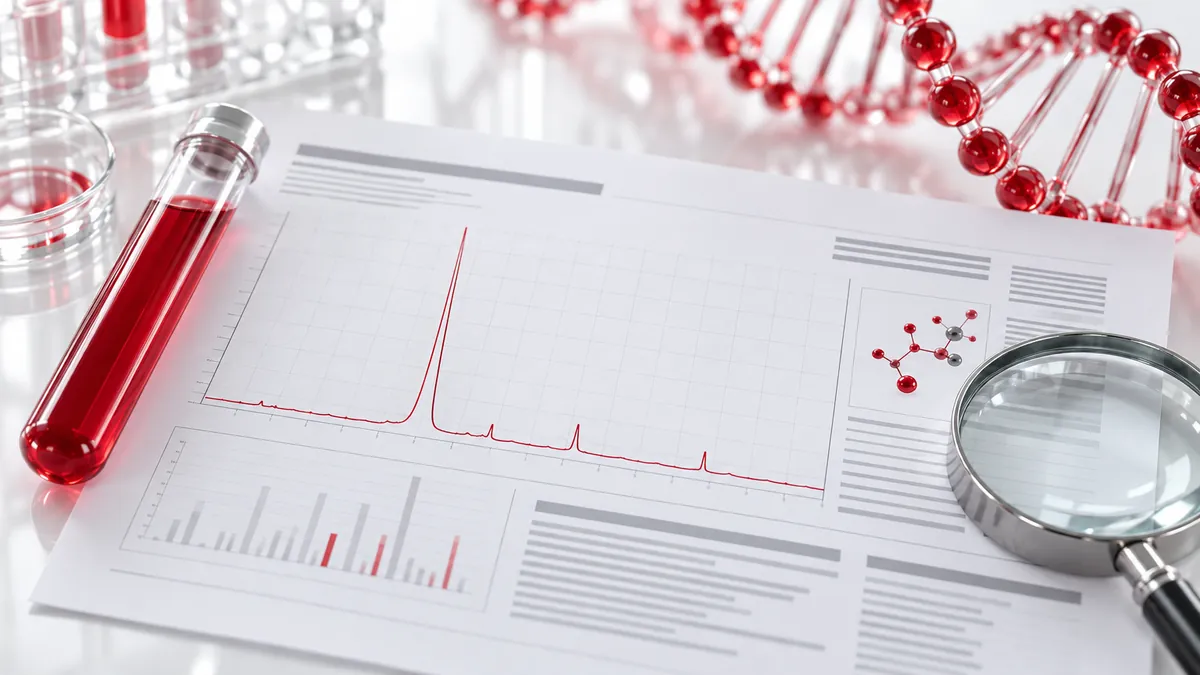
A certificate of analysis (COA) is the record sheet for one batch: it says what the laboratory measured, which limit was expected and what it found. To read one, go line by line and, before looking at any number, confirm which material and which batch it describes. The certificate published on this site is the one for the active ingredient (batch R20260318 of retatrutide, the raw material in powder form); the certificate for a batch of the finished product is requested by WhatsApp. This guide uses only the lines the published document actually contains.
Which material and which batch does it describe?
The header gives the name of the material, the batch number and the production date. The batch number ties the sheet to one specific quantity of material; another batch has its own analysis and its own results. The production date is not the expiry date, and neither replaces the other. The published document, which carries the VLS logo and English text, describes the raw material as a white powder and also records the condition in which it was stored.
This matters for a simple reason: a certificate for the active ingredient describes the raw material before it becomes a product. It does not describe the finished pen or the solution inside it.
Is it the right molecule, and how pure is it?
Two lines answer this. The first confirms the molecular mass: the certificate reports the mass of the main component and the result matches the mass expected for retatrutide, which supports the identity of the material. The second is the purity reported in the certificate: how much of what was detected is the main molecule. For the published batch, that line reads 99.38%.
What is missing to reach 100% appears as total impurities, and the certificate also singles out the largest individual impurity. That second line helps tell apart two situations that look alike in the total: many tiny impurities, or a single one that stands out. A round 100% almost never appears on a certificate, because every method has a detection limit.
Why are purity and peptide content different numbers?
Purity compares molecules with one another: of everything detected, how much is the right molecule. Peptide content asks something else: of all the powder that was weighed, what share is peptide. The rest of the powder is not impurity in the same sense; it is usually water and salts associated with the peptide. That is why the certificate also lists the water content, the sodium, whether acetic acid is present (here, not detected) and the pH, which shows whether a solution of the material is more acidic or more alkaline. A powder can have high purity and a lower peptide content without contradiction: they are different questions.
What do the lines on solvents, microorganisms and endotoxins say?
These lines show what the process may have left behind. Under residual solvents, the certificate checks liquids that may have been used during production and purification; for each one the result is a measured value or the words “not detected”, which means the method did not find it above its detection limit. The microbial limits give the total count and the count of yeasts and moulds, preceded by the “less than” sign (<): the result came in below the value shown. Bacterial endotoxins are fragments of the wall of certain bacteria; the certificate states whether the result complies with the limit set.
Result against specification, and what this document does not cover
Each result makes sense only beside its specification, the limit or acceptable range set before the analysis. Reading is comparing: is the result within what was expected for that line? A number with no criterion beside it says little, and an expression such as “complies” is precisely the summary of that comparison.
The published certificate describes the raw material. The certificate for a batch of the finished product, such as a pen, is a separate document with lines of its own for that stage, and it is requested separately: send the batch number printed on the box by WhatsApp, starting from the contact page. The published certificate is in the certificates section, and the guide to reading the label shows where to find the batch number on the box.
For information only; it does not replace the advice of a healthcare professional.